Sensellae explores how devices and tools might create a mutual sensory extension between people and moths. A light trap and a scanner/interface intended to read moth behavior were built as physical prototypes in 2008. The remaining training and scent-output devices were developed as concepts.
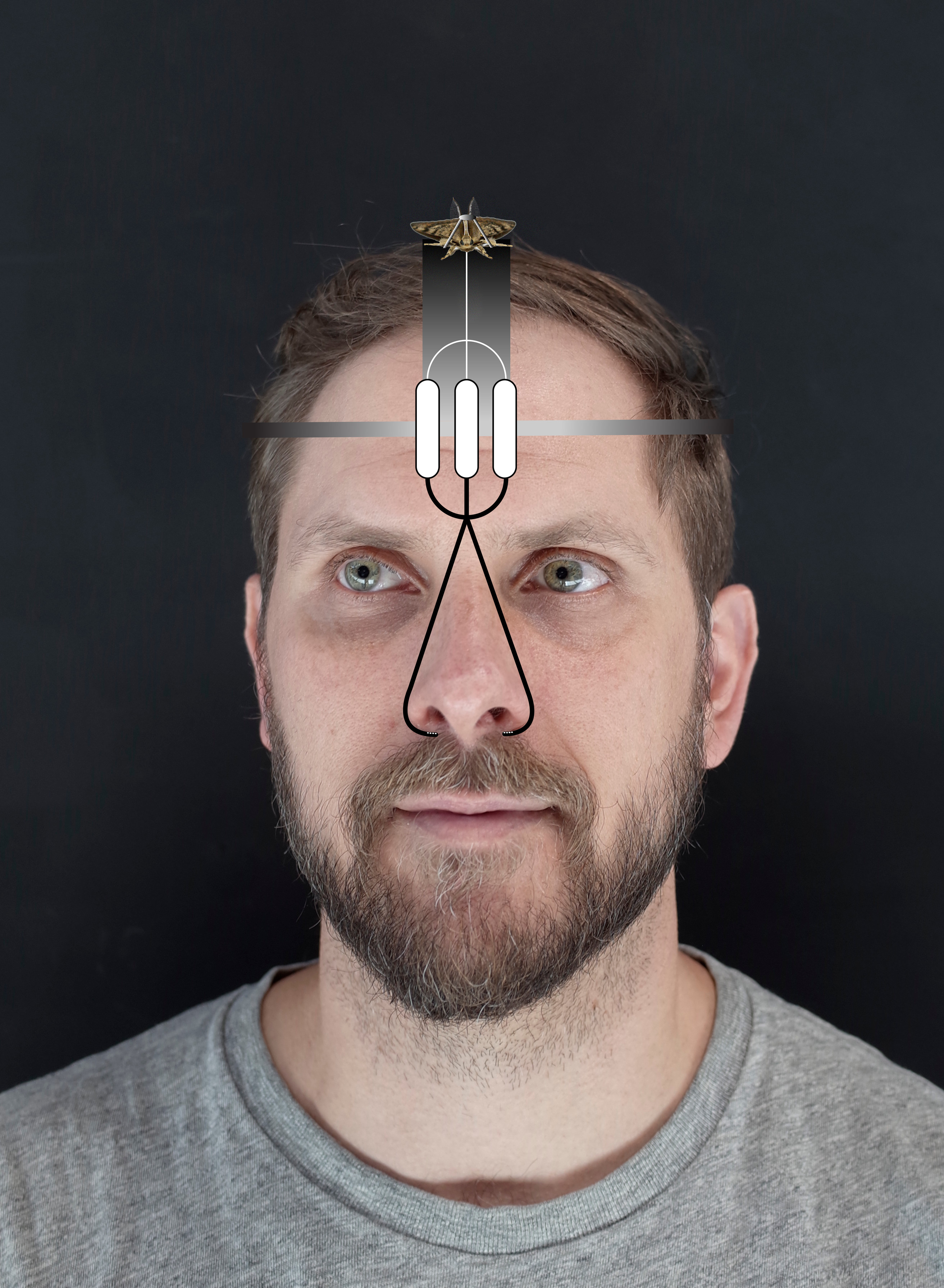
Within the proposed training device, a moth would learn to respond to a selected odor. That response would activate a vaporizer, translating the detected chemical cue into a scent perceptible to its human partner. Perception becomes part of an interspecies relationship, shaped by human attention, the insect’s responses and the conditions that support their encounter.
Extending this proposition, the project could investigate whether moths can distinguish changes in the volatile compounds a person emits, including those that might accompany hormonal fluctuations. The potential advantage is making an otherwise unnoticed chemical change available to perception.
This sensory extension opens questions about the boundaries of bodily privacy: what becomes perceptible, what is willingly shared, and who determines its meaning? A moth’s response cannot establish desire, attraction or consent; those remain for the people involved to communicate.

Exhibitions & related material
Articles, publications & talks
- Insect SpectaclesFrom Geoff Manaugh’s interview in Landscape Futures (2013).