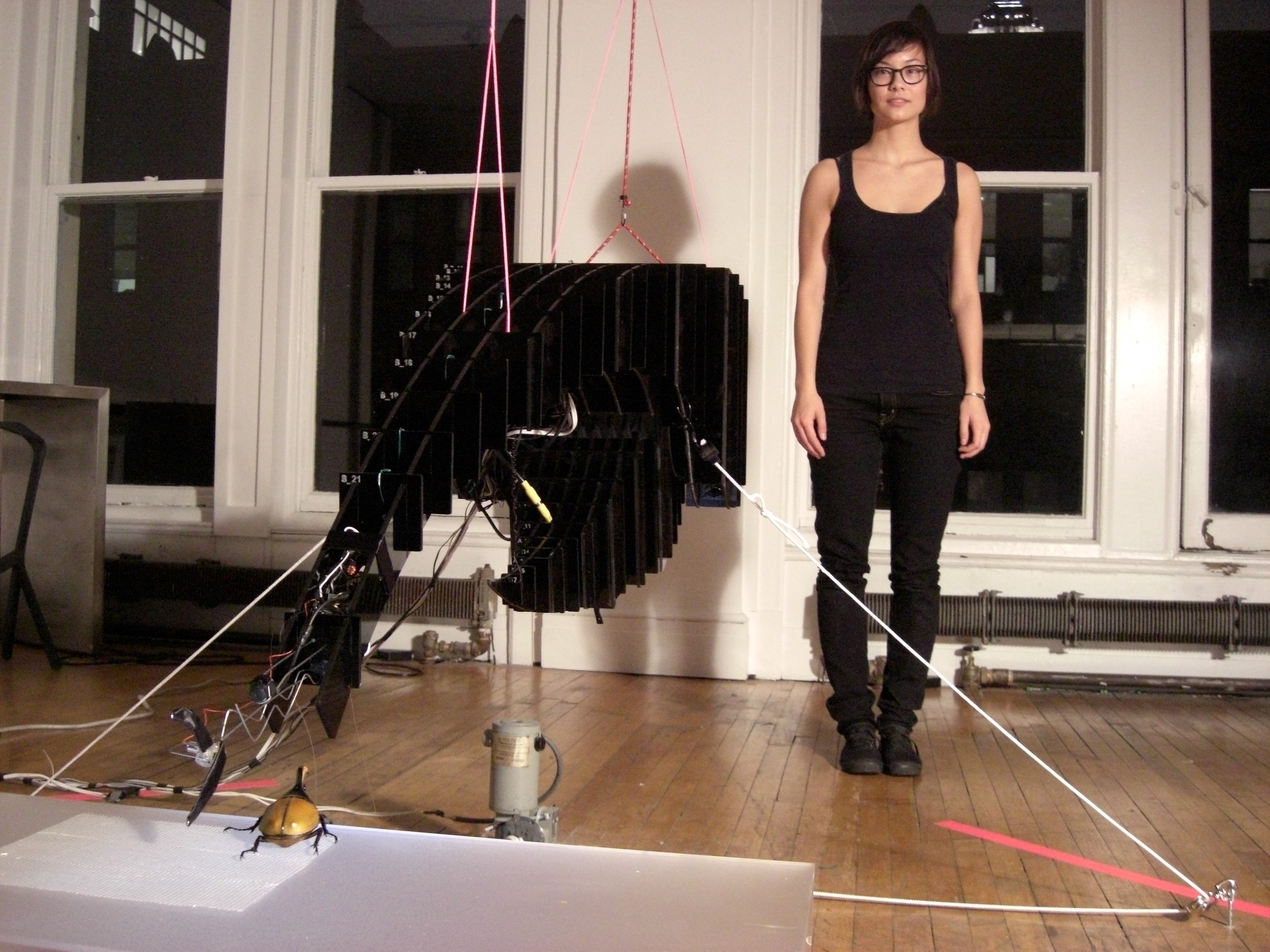
I first encountered a rhinoceros beetle in a Tokyo pet shop, where it was being sold as a pet. In northern Thailand, rhinoceros beetles are also kept for organized wrestling competitions. Beetle Wrestler places a human in the role of the beetle’s opponent, asking what changes when the spectator enters the encounter.
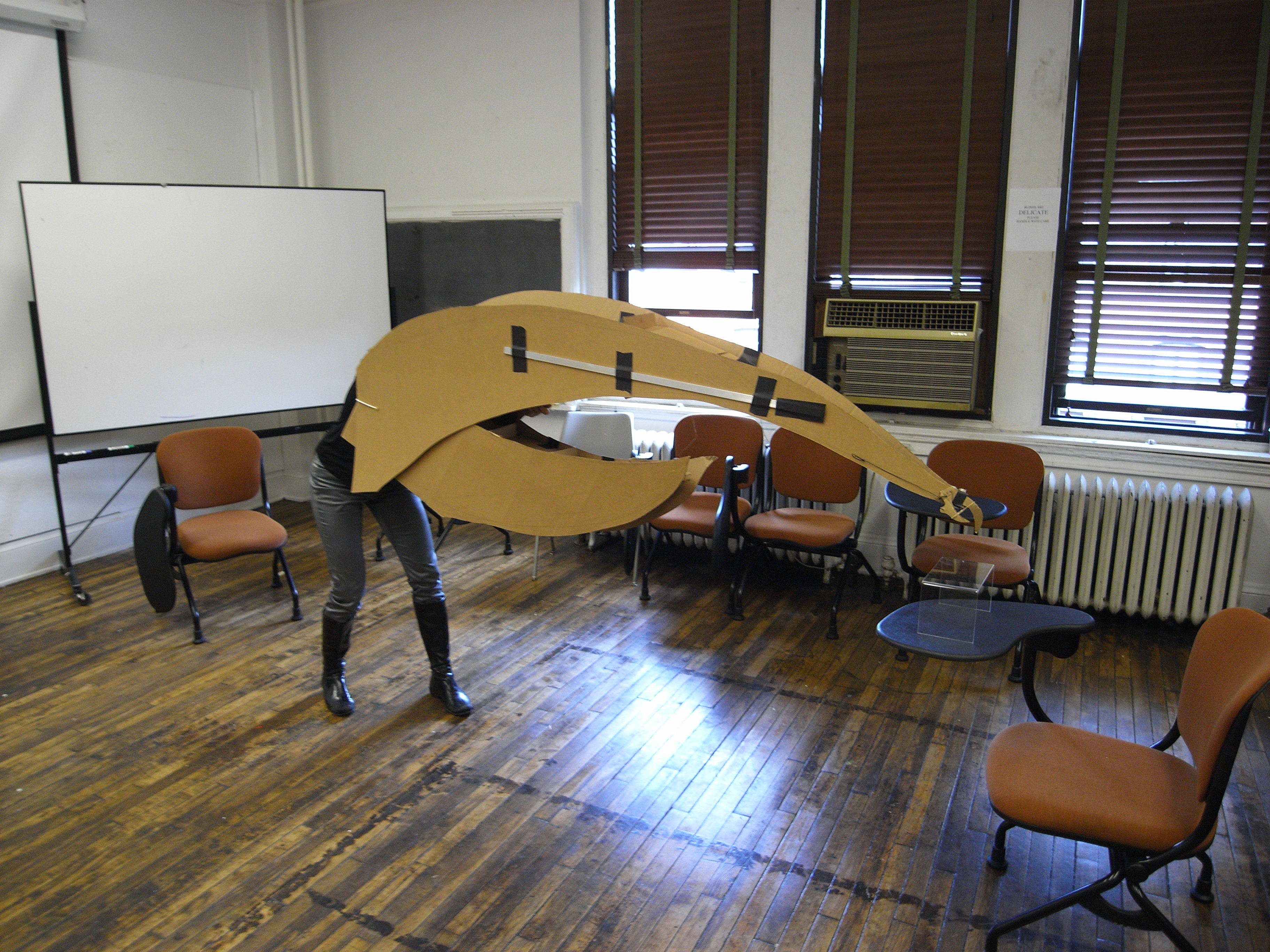
The robotic interface is designed to connect a person with one of the strongest animals relative to its body weight. Wheelchair motors and custom mechanisms scale forces in both directions, aiming to create a more even physical playing field. A camera and helmet‑mounted screen bring the human participant face to face with the beetle, combining a close‑up view with the bodily experience of its strength.
The project asks what we can learn about another animal through a physical exchange. Does exchanging force in both directions create reciprocity? Who sets the terms of the encounter, and what remains beyond the interface’s reach?
In 2014, Beetle Wrestler was featured in MoMA’s Design and Violence, co-organized by Paola Antonelli and Jamer Hunt. The curatorial introduction explored the apparatus’s promise of empathy. In the accompanying essay, anthropologist Hugh Raffles challenged its claim to reciprocity, arguing that physical contact cannot bridge the difference between human and insect experience. His critique distinguishes exchanging forces from sharing an experience.
Developed with Natalie Jeremijenko, Leigha Dennis and Lee von Kraus, Beetle Wrestler was installed at the Van Alen Institute in 2008.
Presented as part of Natalie Jeremijenko’s OOZing project, supported by the 2008–2009 New York Prize Fellowship at Van Alen Institute in partnership with the Social Science Research Council.