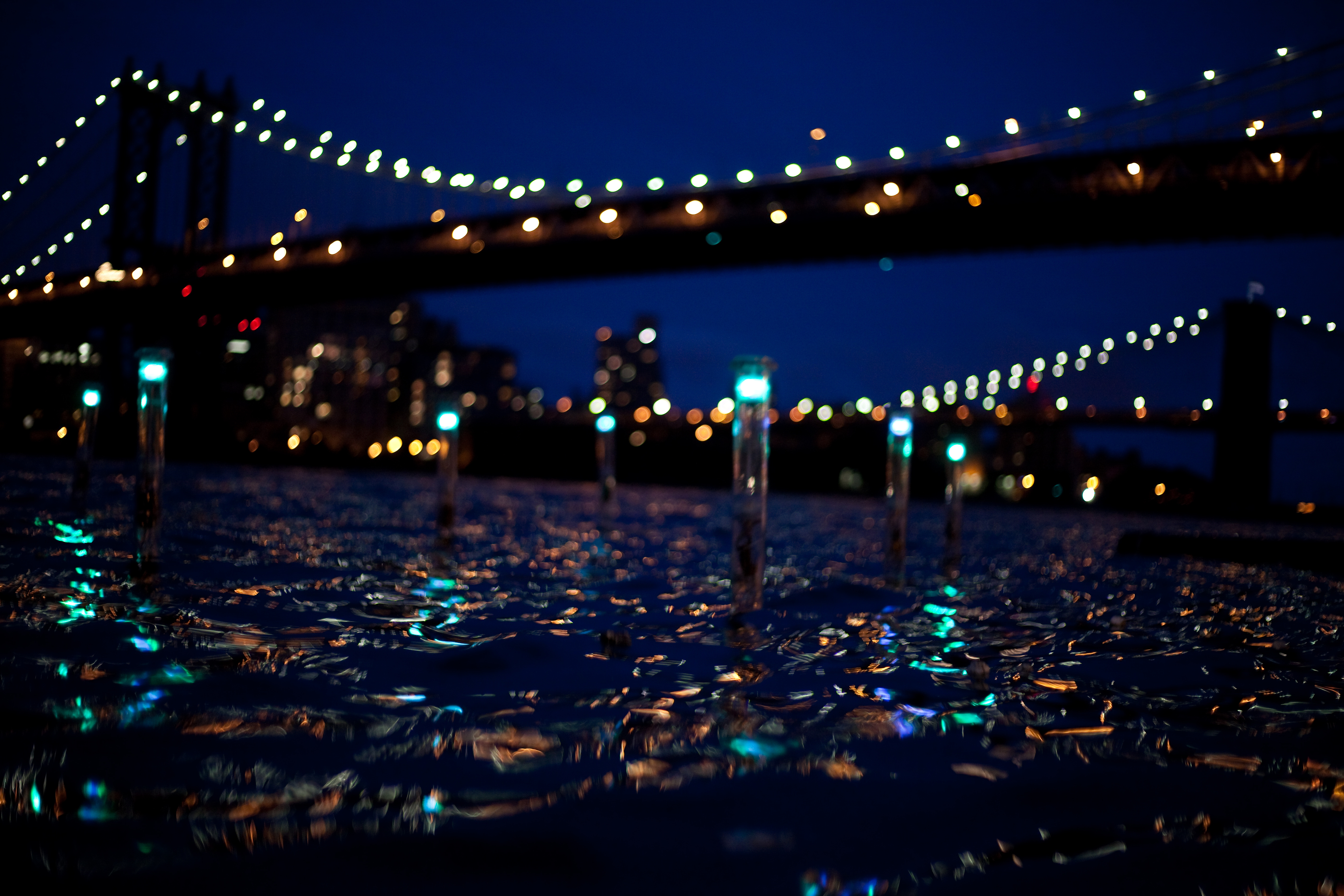
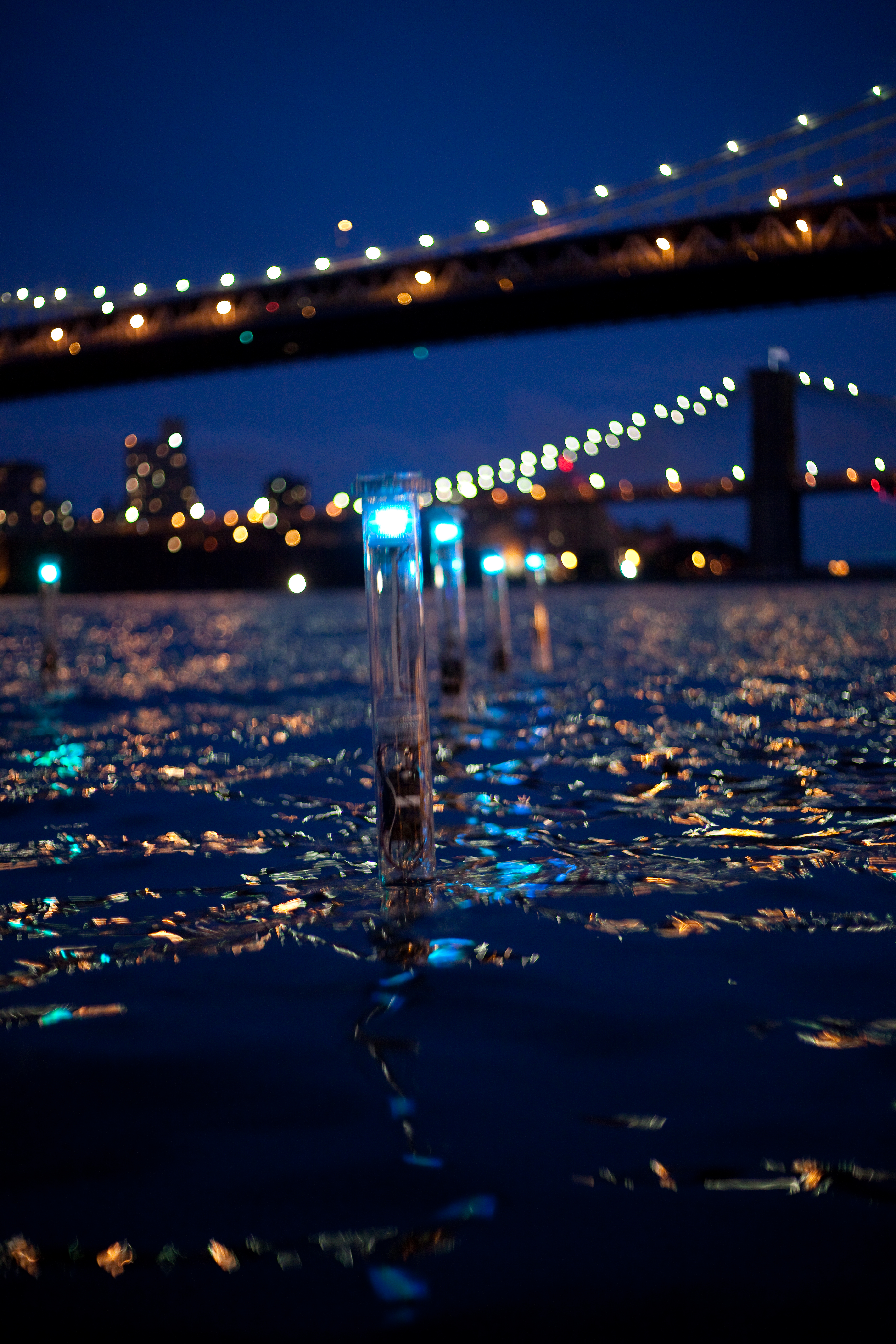
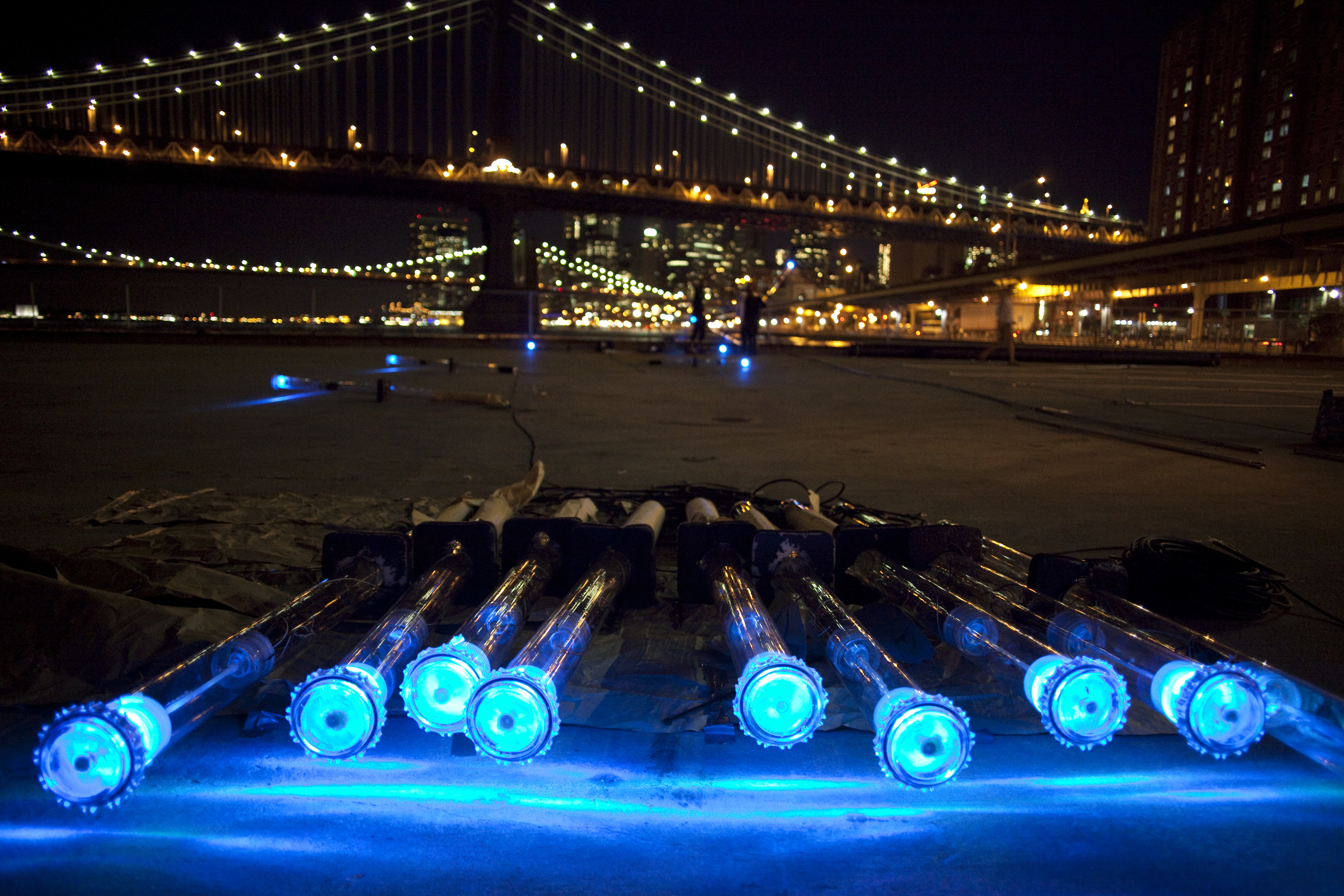
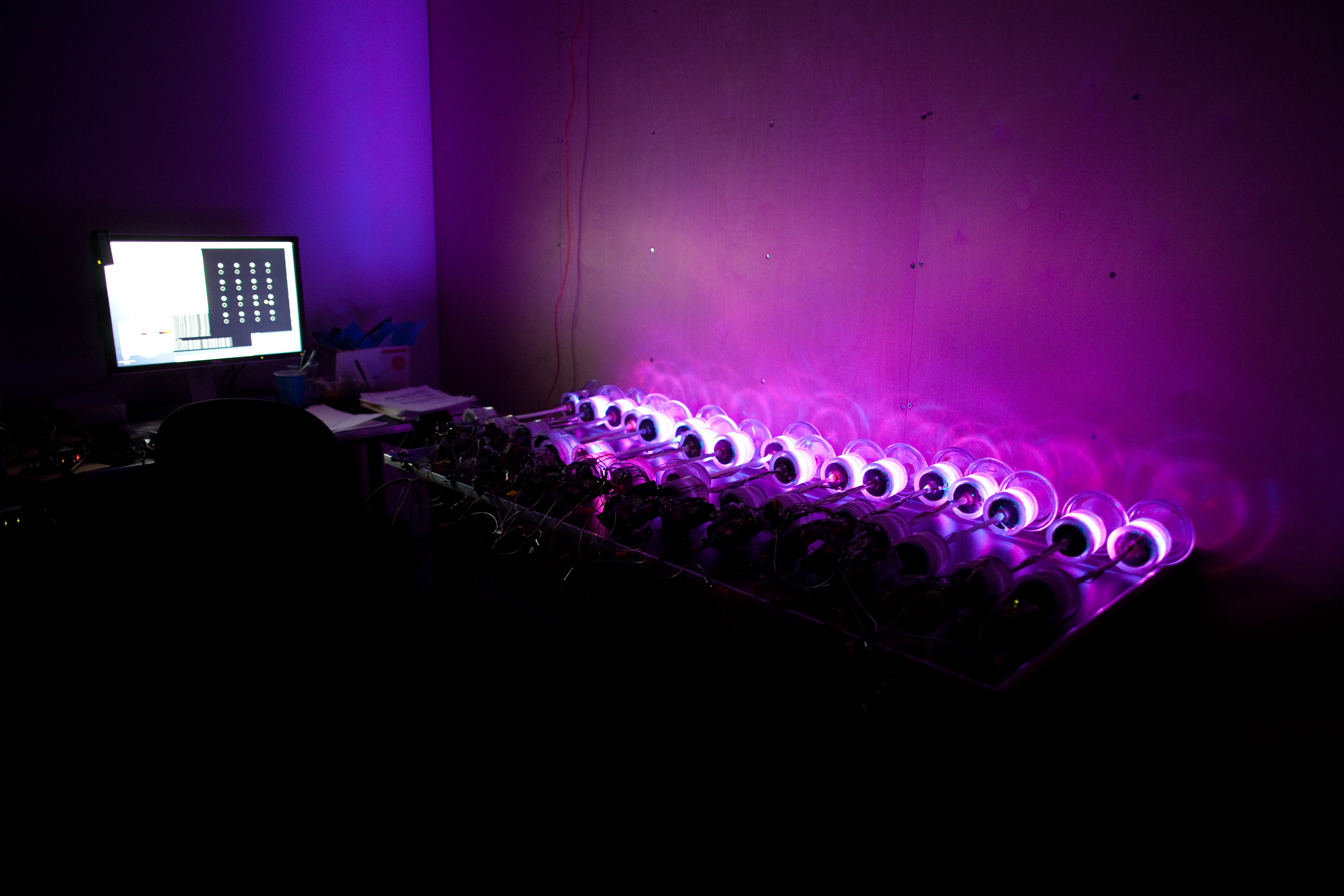
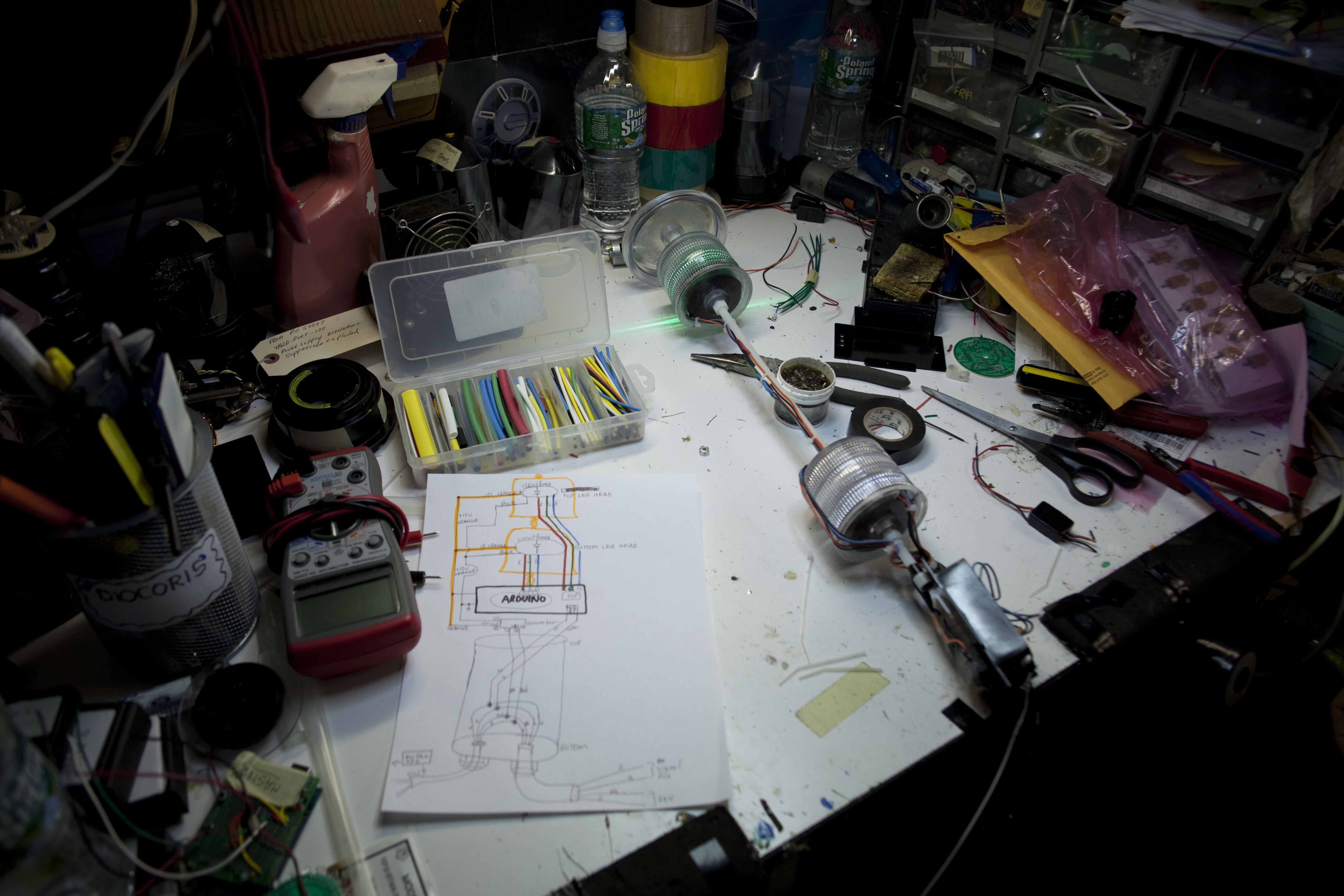
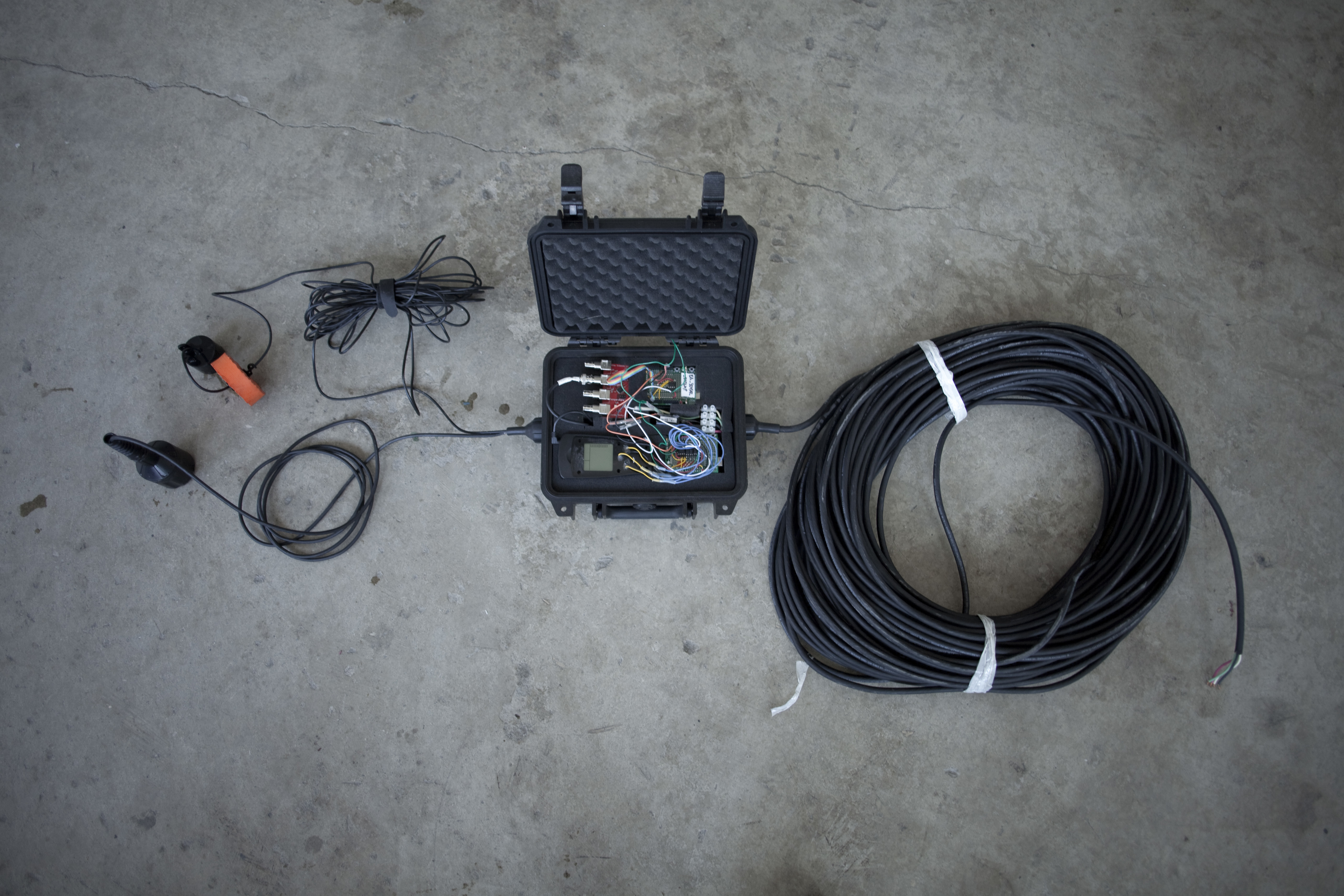
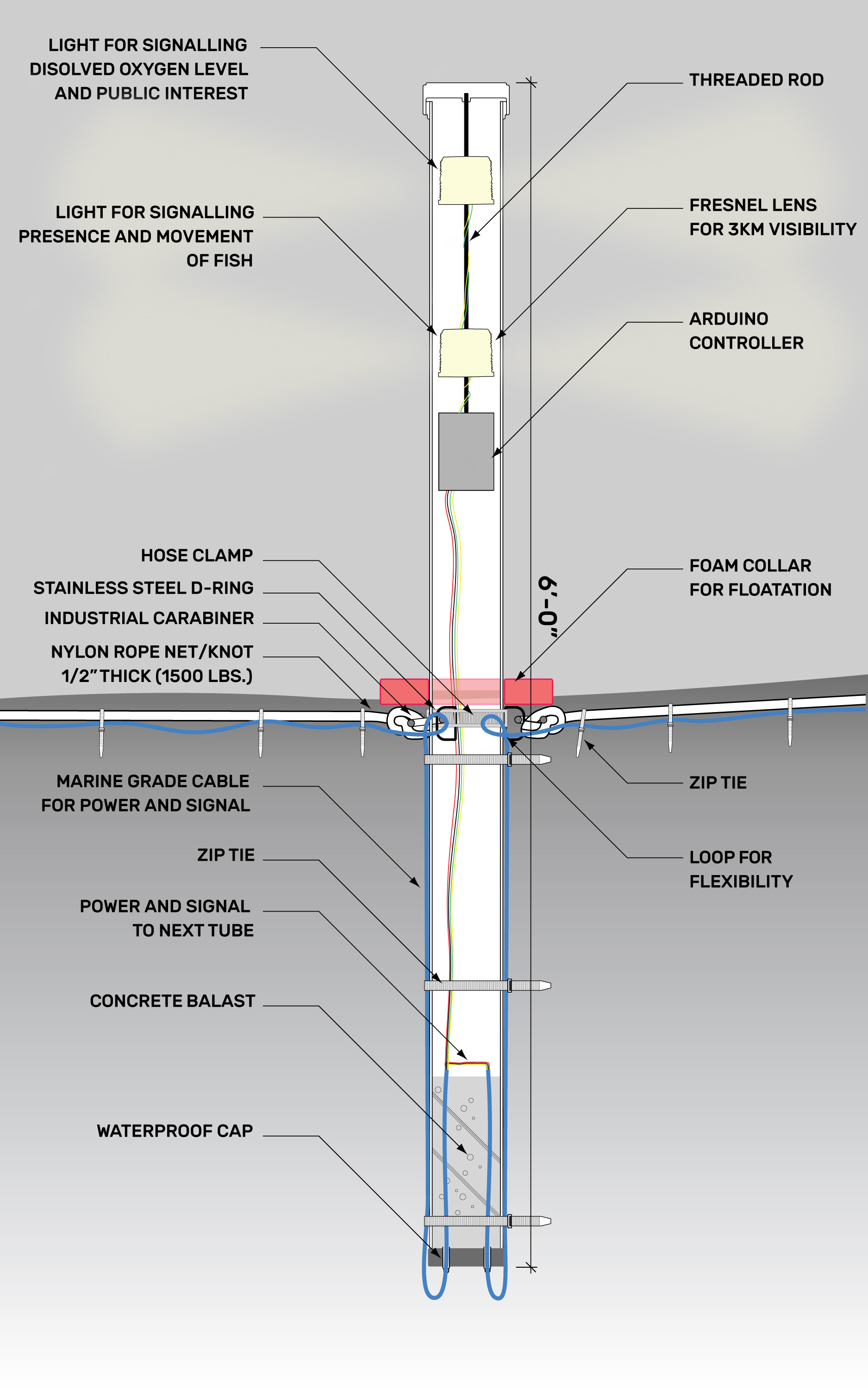
Grid of robotic buoys, marine grade electronics
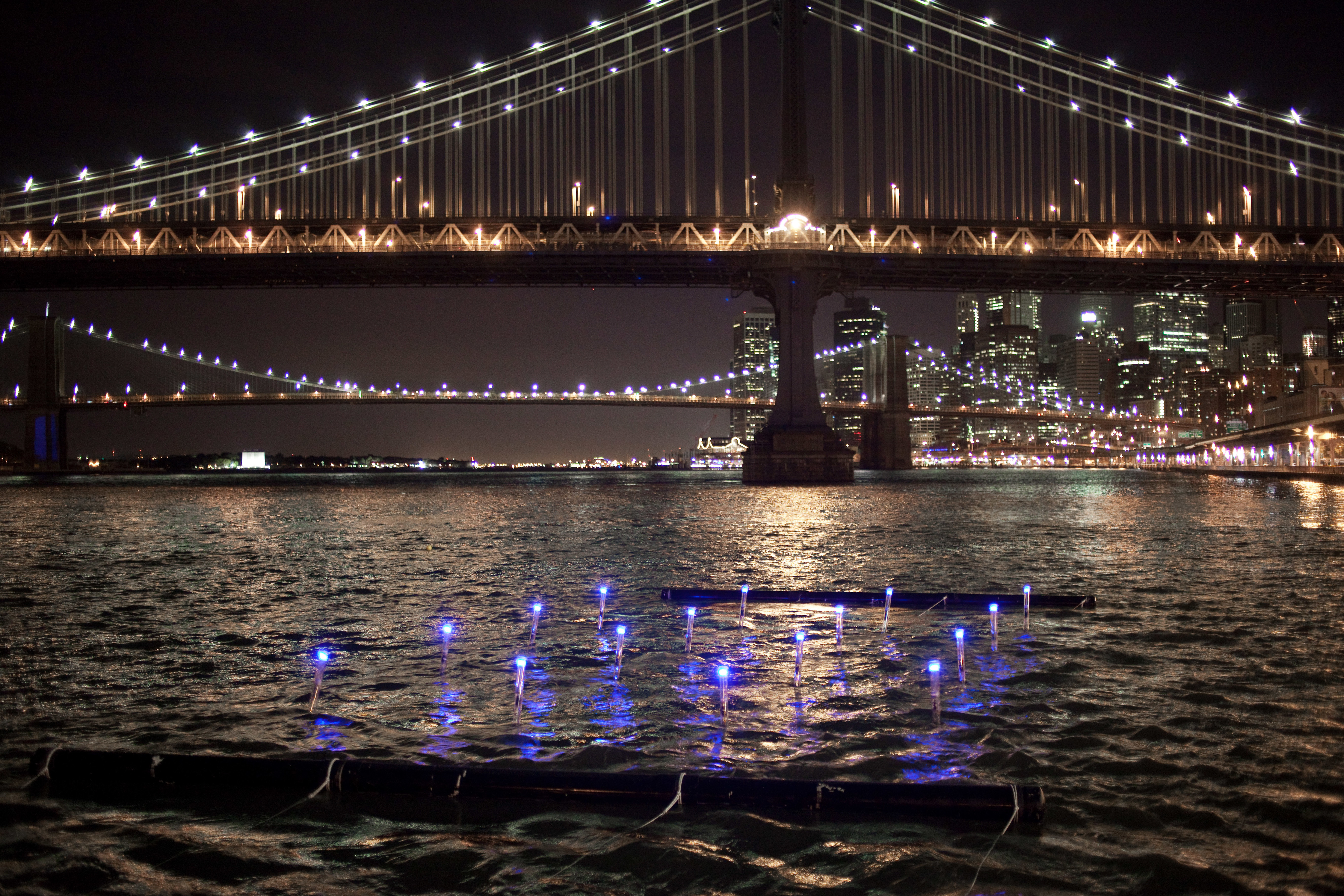
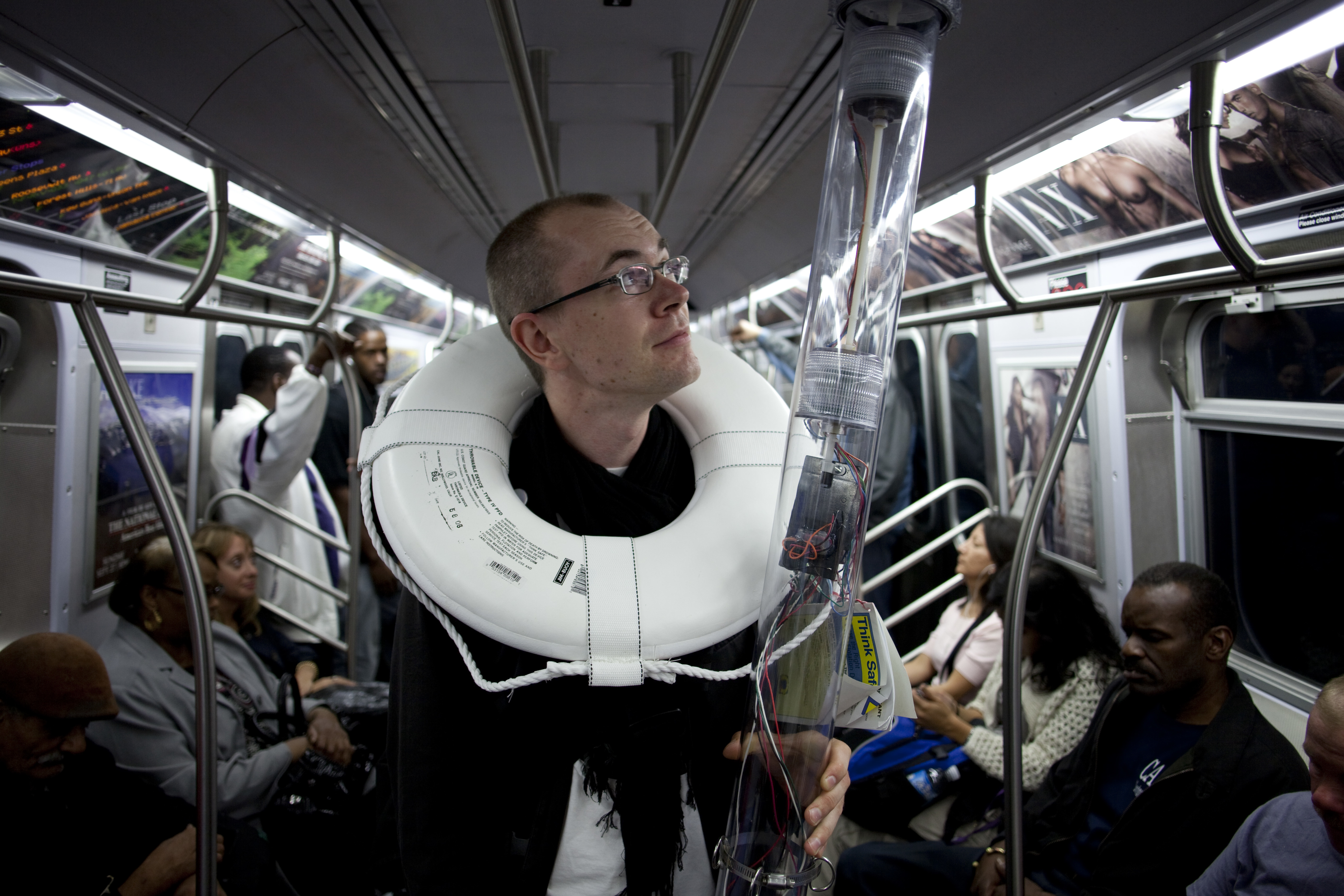
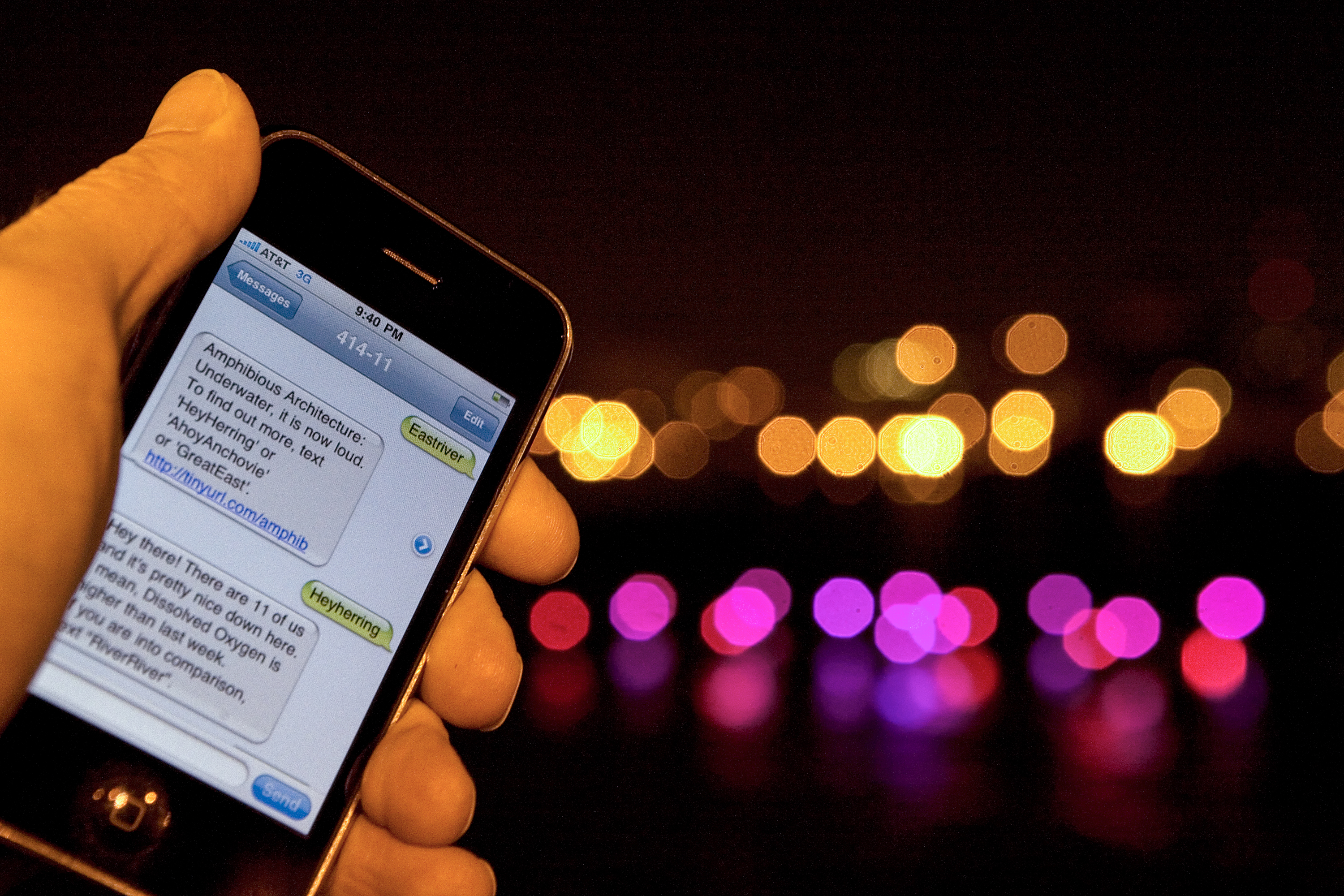
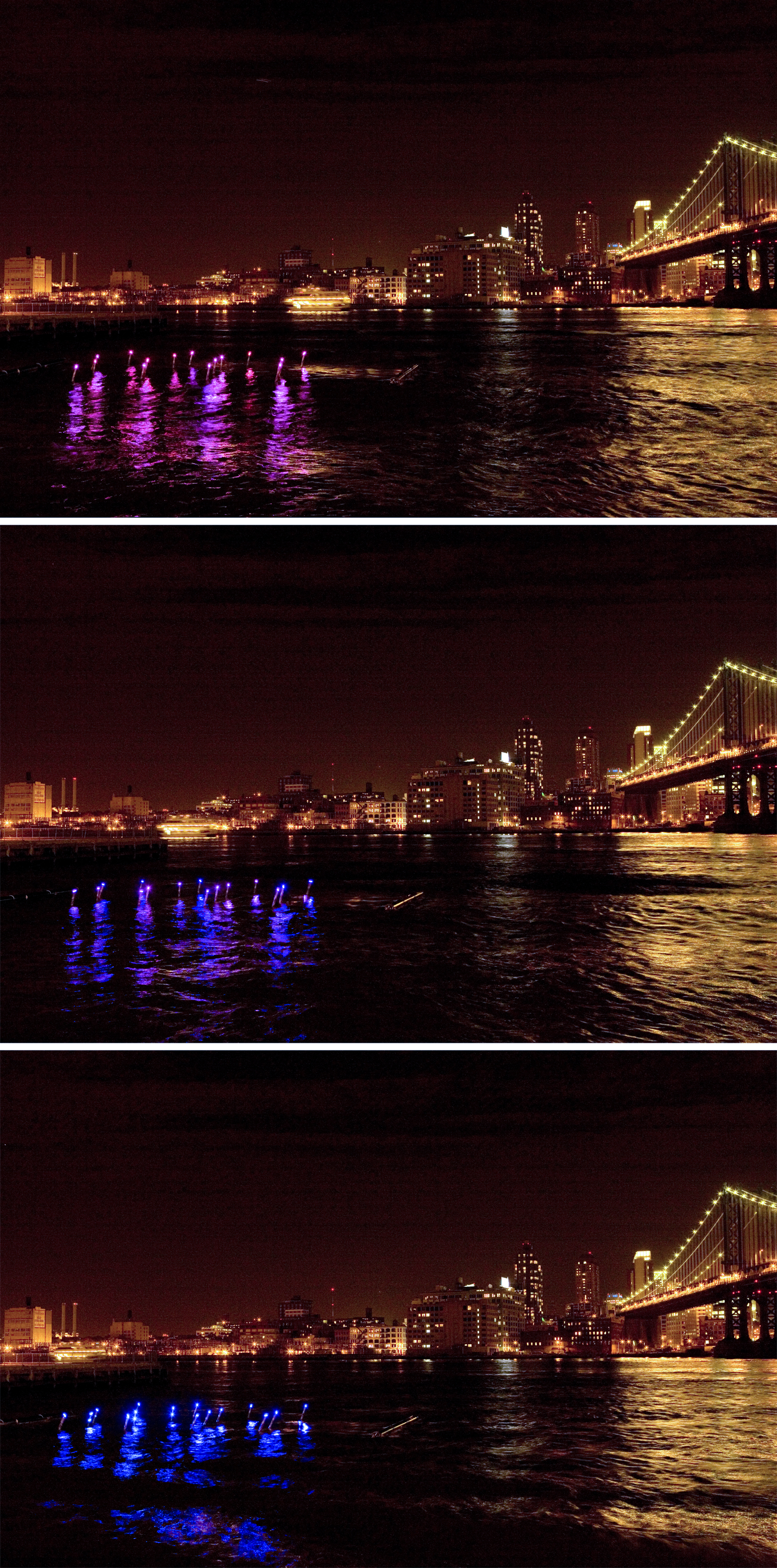
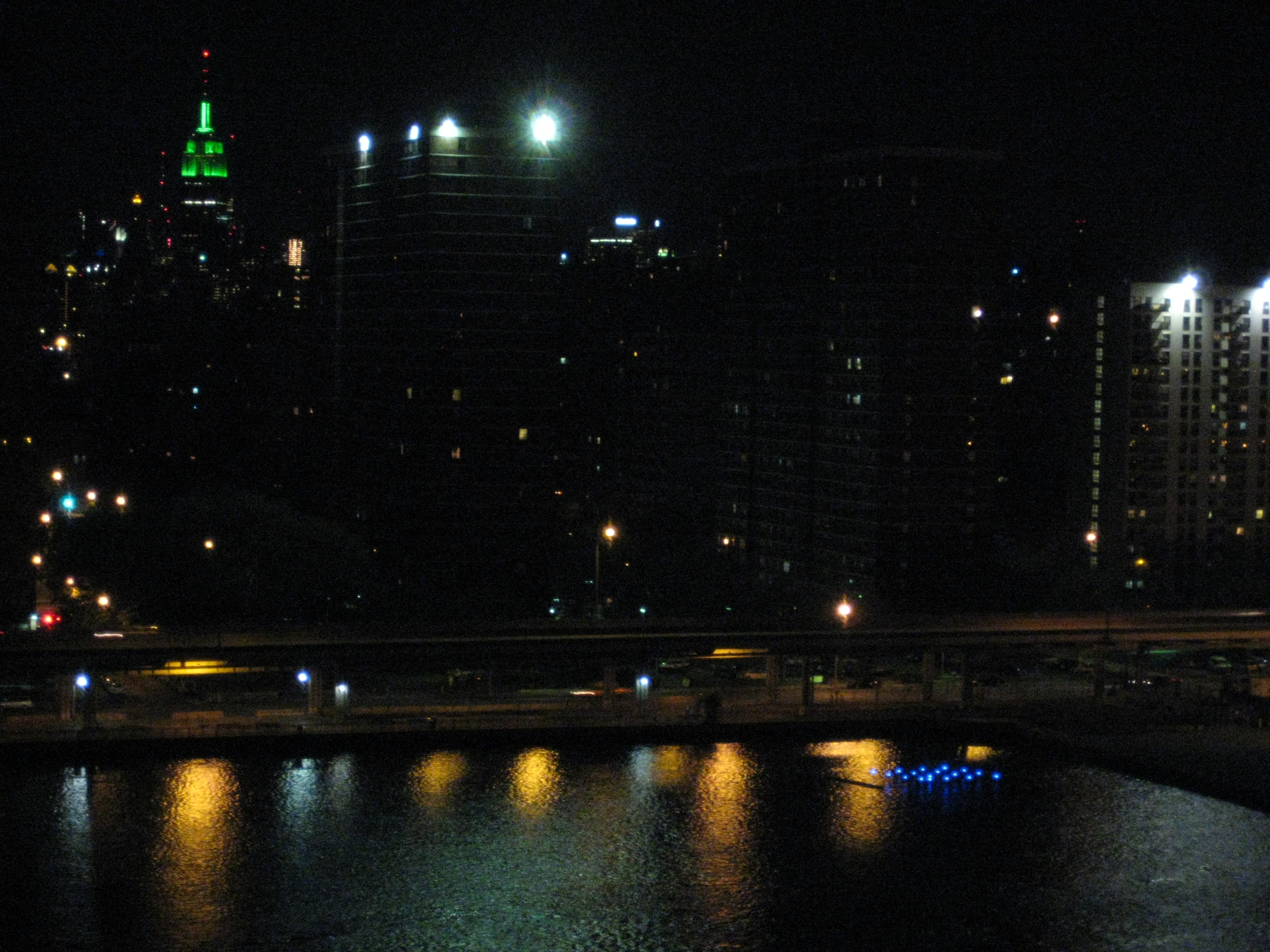
Amphibious Architecture brought the life of New York’s rivers into public view. Installed in the East River and Bronx River in 2009, two networks of floating tubes combined underwater sensors with lights above the surface. The project monitored dissolved oxygen (DO) levels and fish presence, and also detected beaver activity in the Bronx River. Changing lights and a text-message interface allowed people on shore to engage with conditions and activity in the rivers.
The invitation to “text-message the fish” gave environmental data a conversational form. Sensor readings became signals that people could notice, interpret and respond to, making ecological activity part of an encounter along the waterfront. The project explored how the life and conditions of a shared habitat could enter everyday public communication.
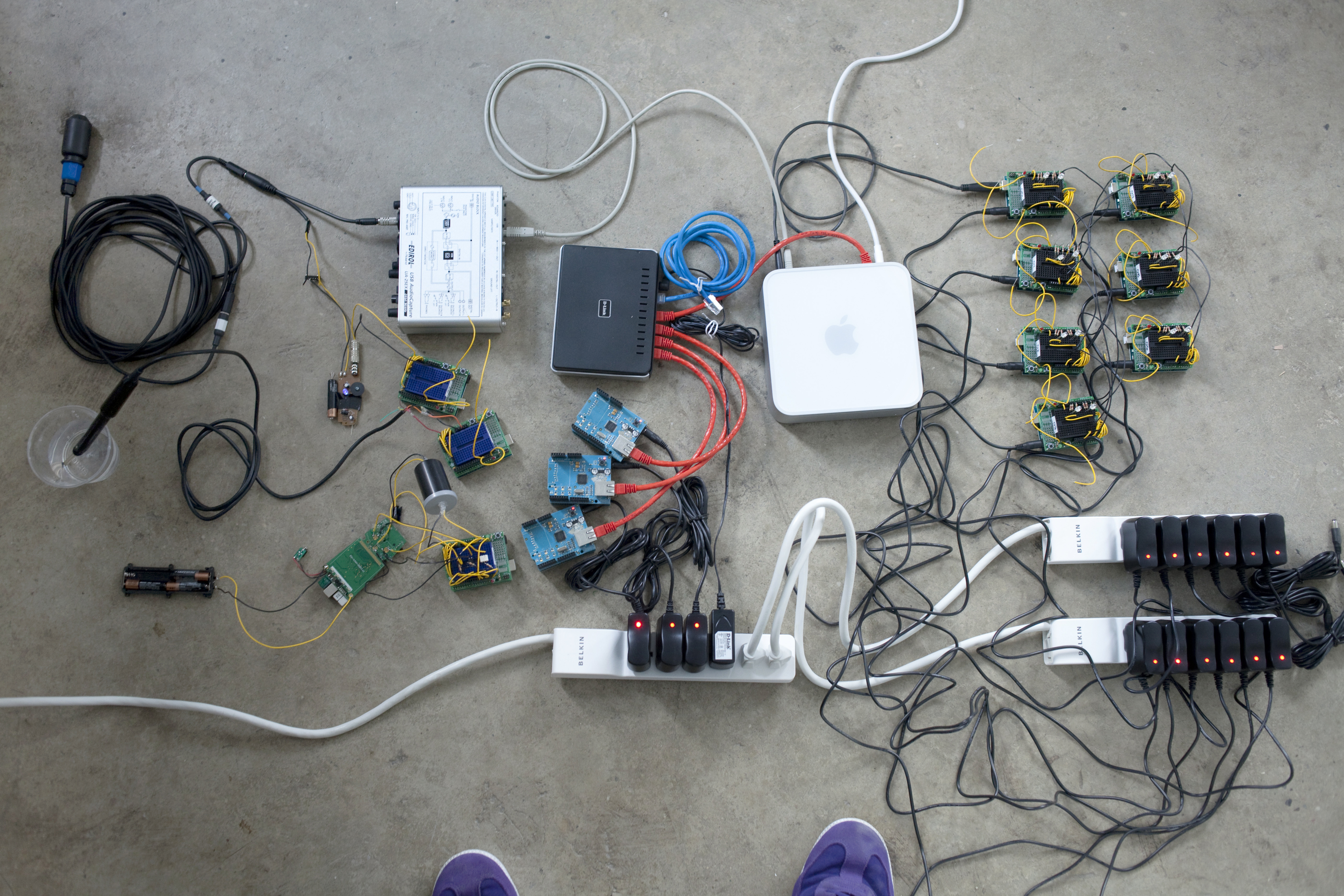
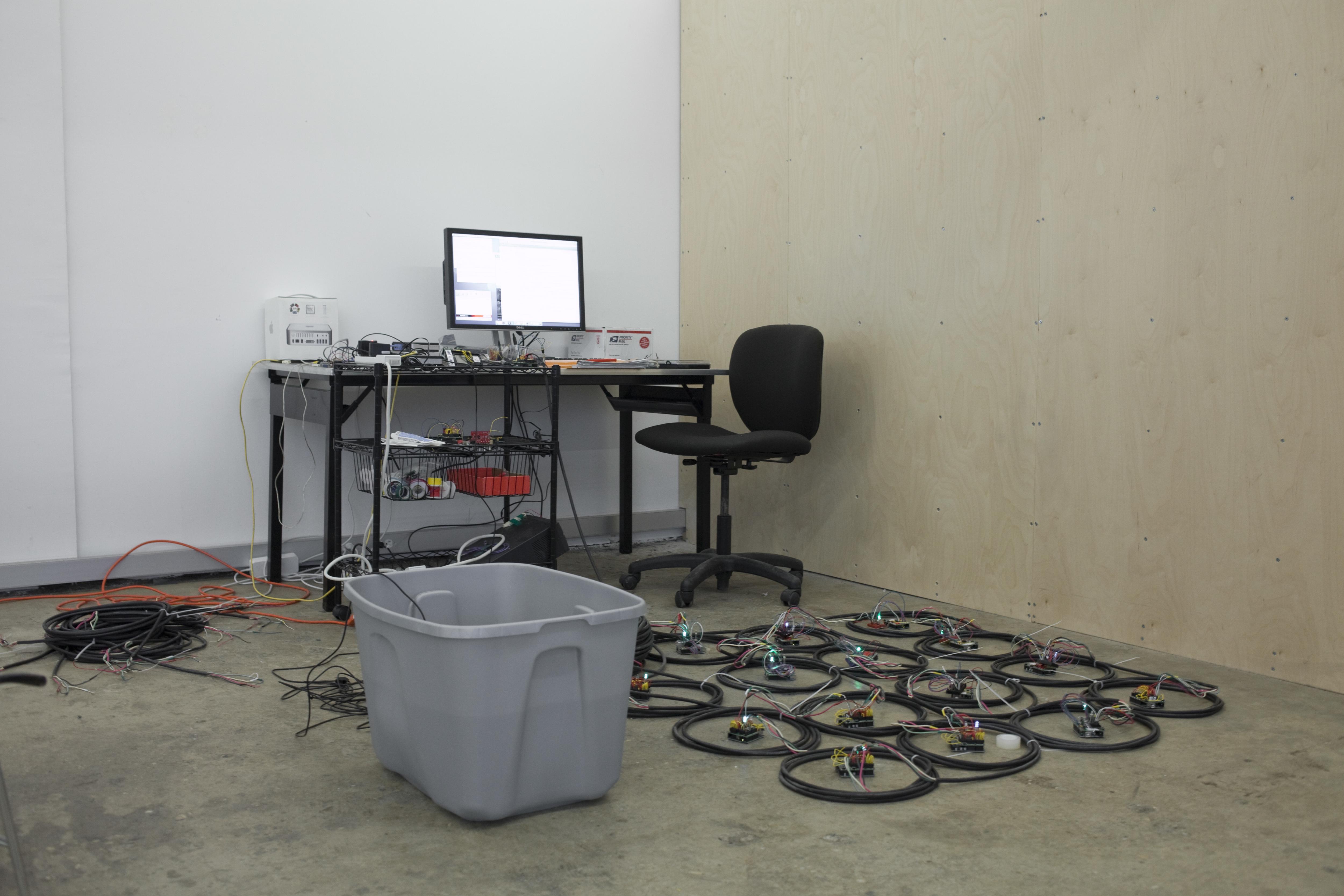
As one of the lead team designers, Chris Woebken worked with Natalie Jeremijenko of xClinic and David Benjamin of The Living to develop the project. His contribution included fish interface and public interaction design, and fabrication of prototypes for fish-presence sensing, dissolved oxygen monitoring and SMS interaction. The environmental and interactive systems remained operational throughout the installation.
The project was developed with xClinic at New York University and The Living Architecture Lab at Columbia University for Toward the Sentient City, curated by Mark Shepard for the Architectural League of New York. The exhibition ran from September 18 to November 7, 2009.
In collaboration with xClinic (NYU) and The Living (GSAPP)
Project team: David Benjamin, Amelia Black, Natalie Jeremijenko, Abha Katarina, Jonathan Laventhol, Deborah Richards, Zenon Tech-Czarny, Kevin Wei, Chris Woebken, Soo-In Yang
Curated by: Mark Shepard
Exhibitions & related material
Articles, publications & talks
- Amphibious Architecture — The Expanded EnvironmentThe Expanded Environment, 2011. Project feature with collaboration credits.
- One Fish, Two Fish…Columbia Magazine, Winter 2009–10. Coverage of the collaborative Amphibious Architecture installation.