Ongoing series of five device designs
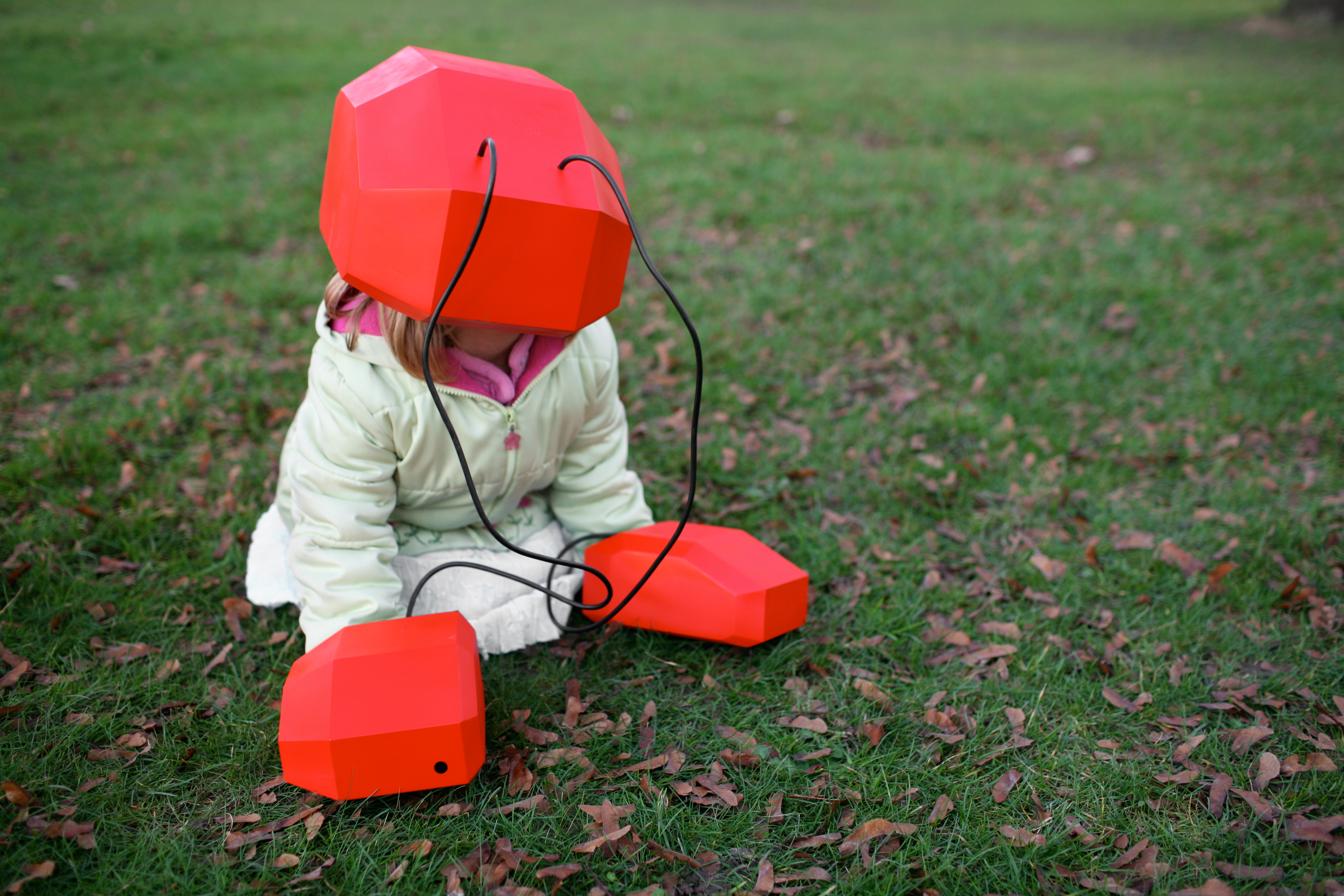
Animal Superpowers is an ongoing series of wearable devices that invites people to explore unfamiliar sensory perspectives through play. Begun in 2007, the project asks how changes in what we can sense might change how we move, find our way and relate to other beings.
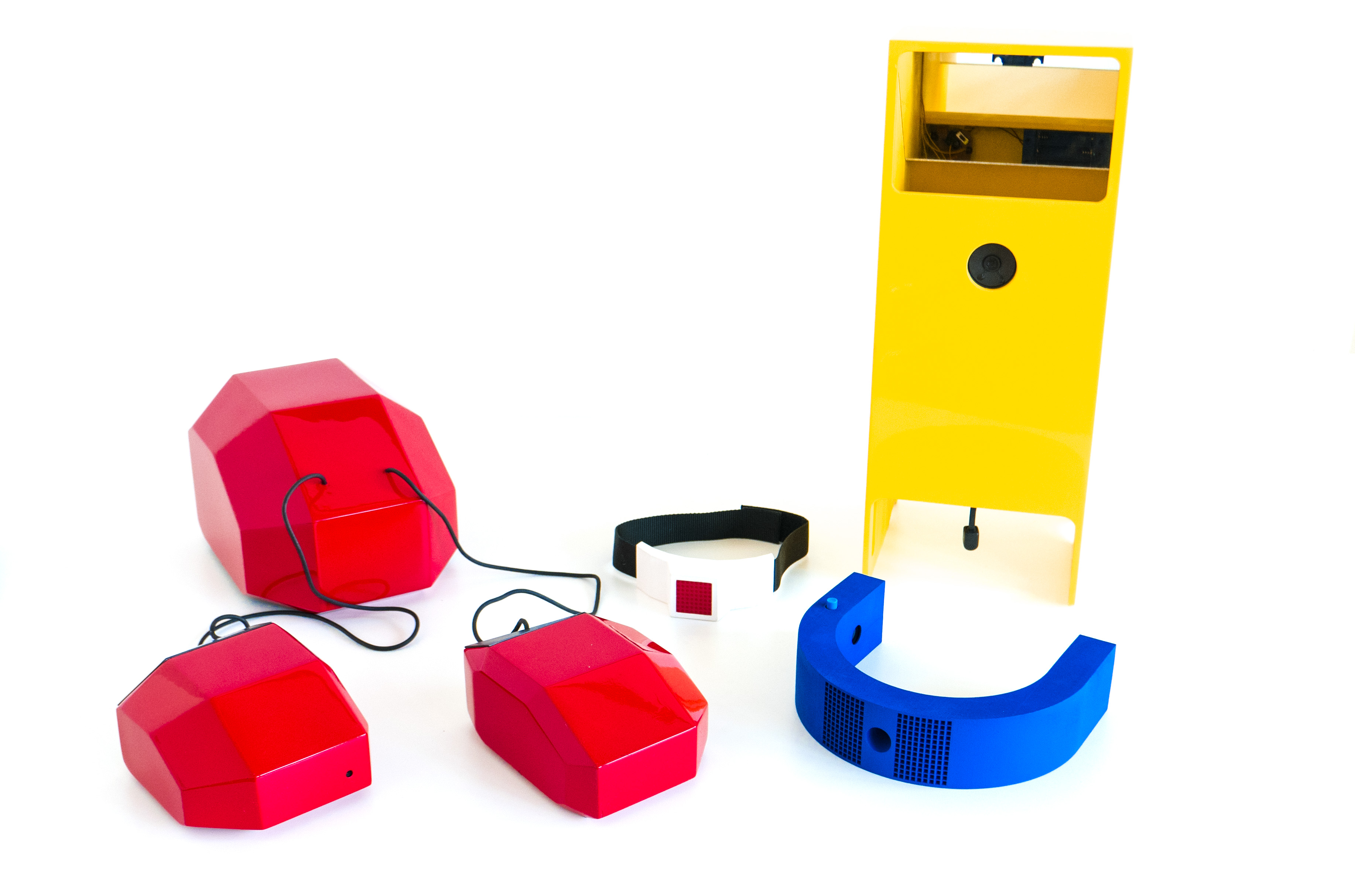
The Ant Apparatus, Bird Device and Giraffe Device, documented in 2008, were followed by Bat Vision Goggles in 2015. Across the series, magnification, vibration, altered voice and height, and translated ultrasound make aspects of other sensory worlds available to human experience. Each device offers a designed approximation through which to question the limits of familiar perception.
The series now includes the Platypus Device, which explores electrosensitivity. The current working set comprises the Ant Apparatus, the Platypus Device, and Bat Vision Goggles. A new edition of the series is planned for 2027.
In collaboration with Kenichi Okada
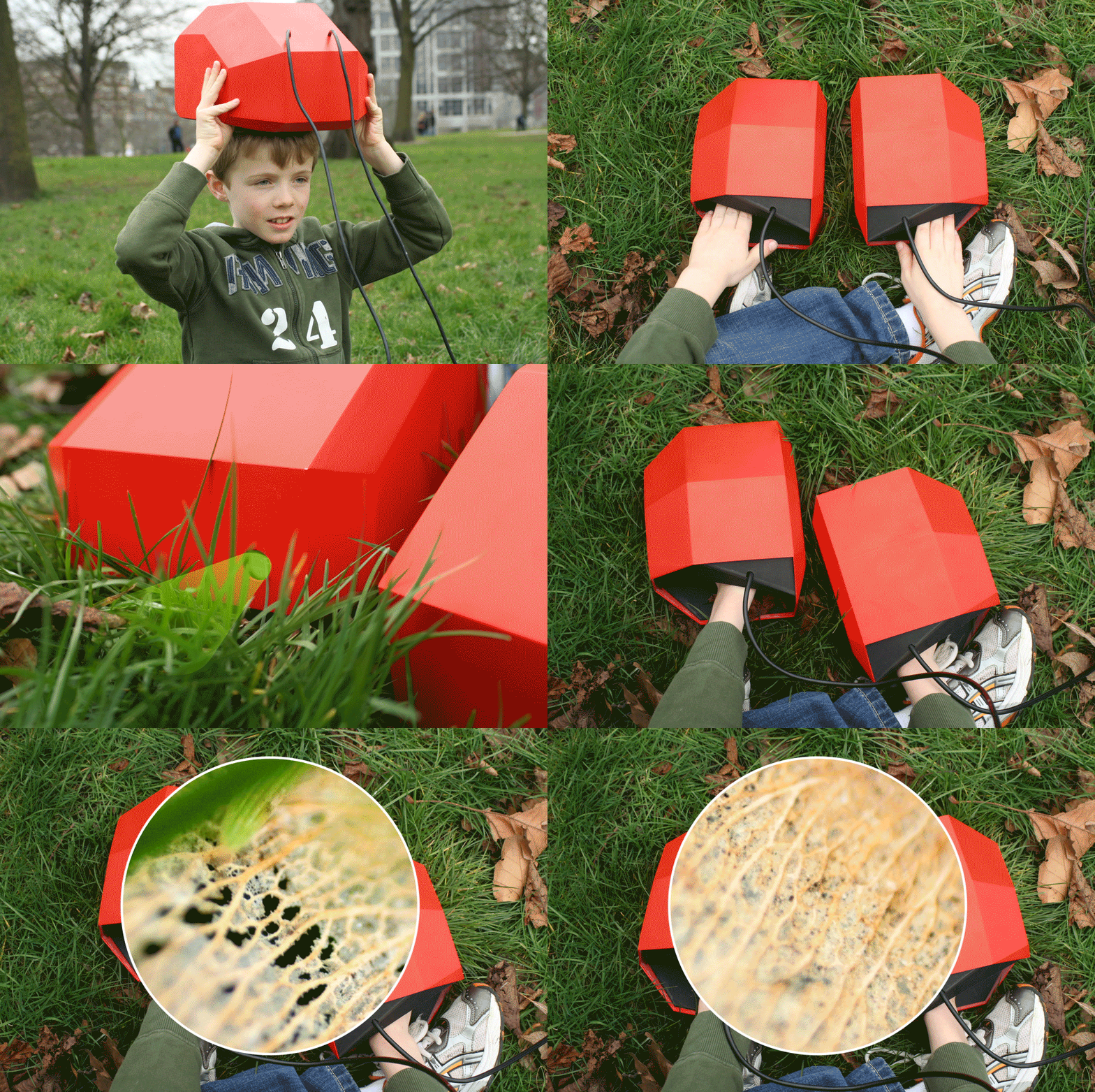
Hand-mounted microscope antennas magnify the wearer’s view 50 times. Exploring the ground through the hands shifts attention toward details that are easily overlooked at human scale.
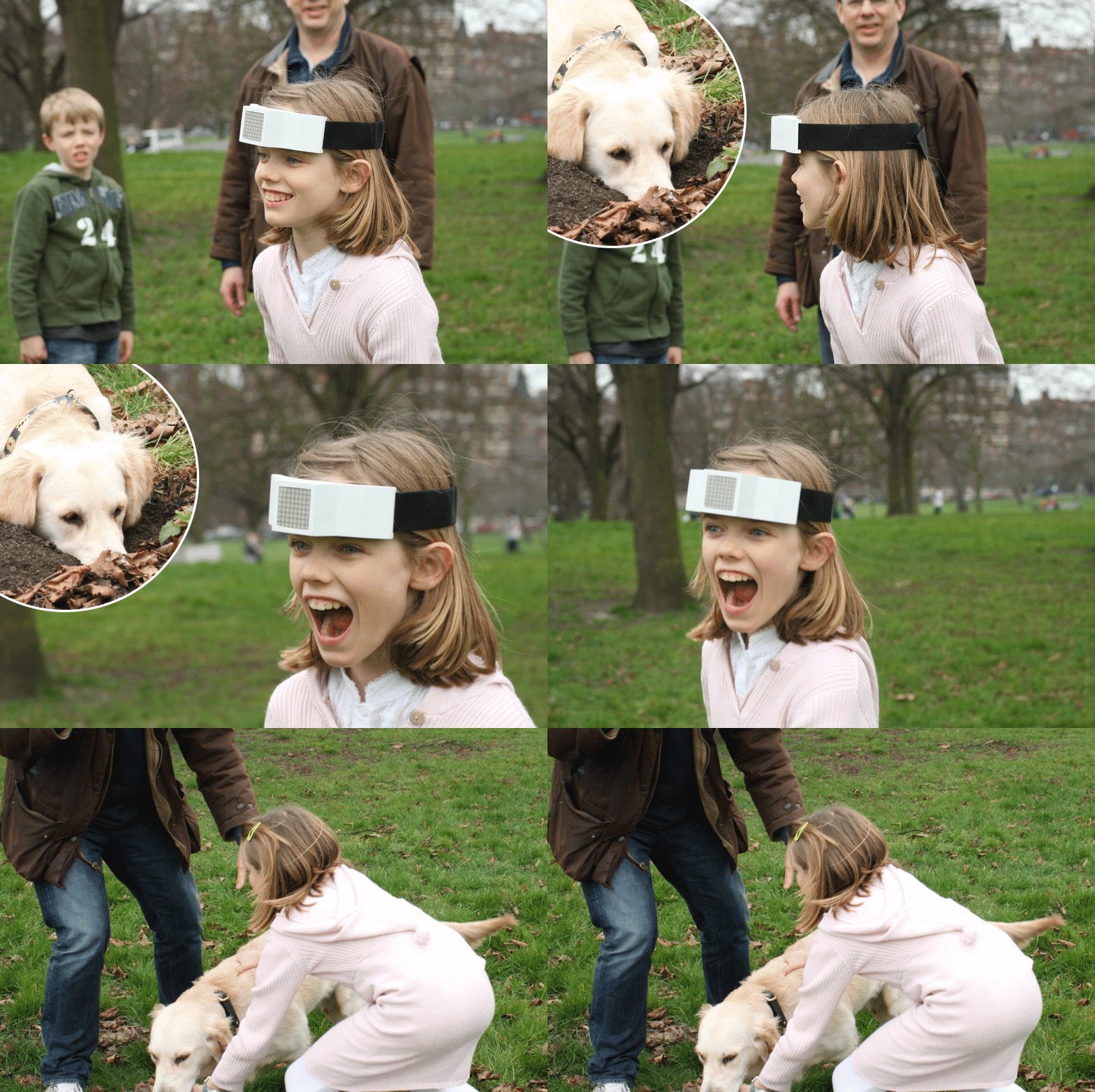
The Bird Device uses GPS and vibration to indicate when the wearer faces a selected direction. It translates orientation into a tactile cue, offering an experiment in finding one’s way through touch.
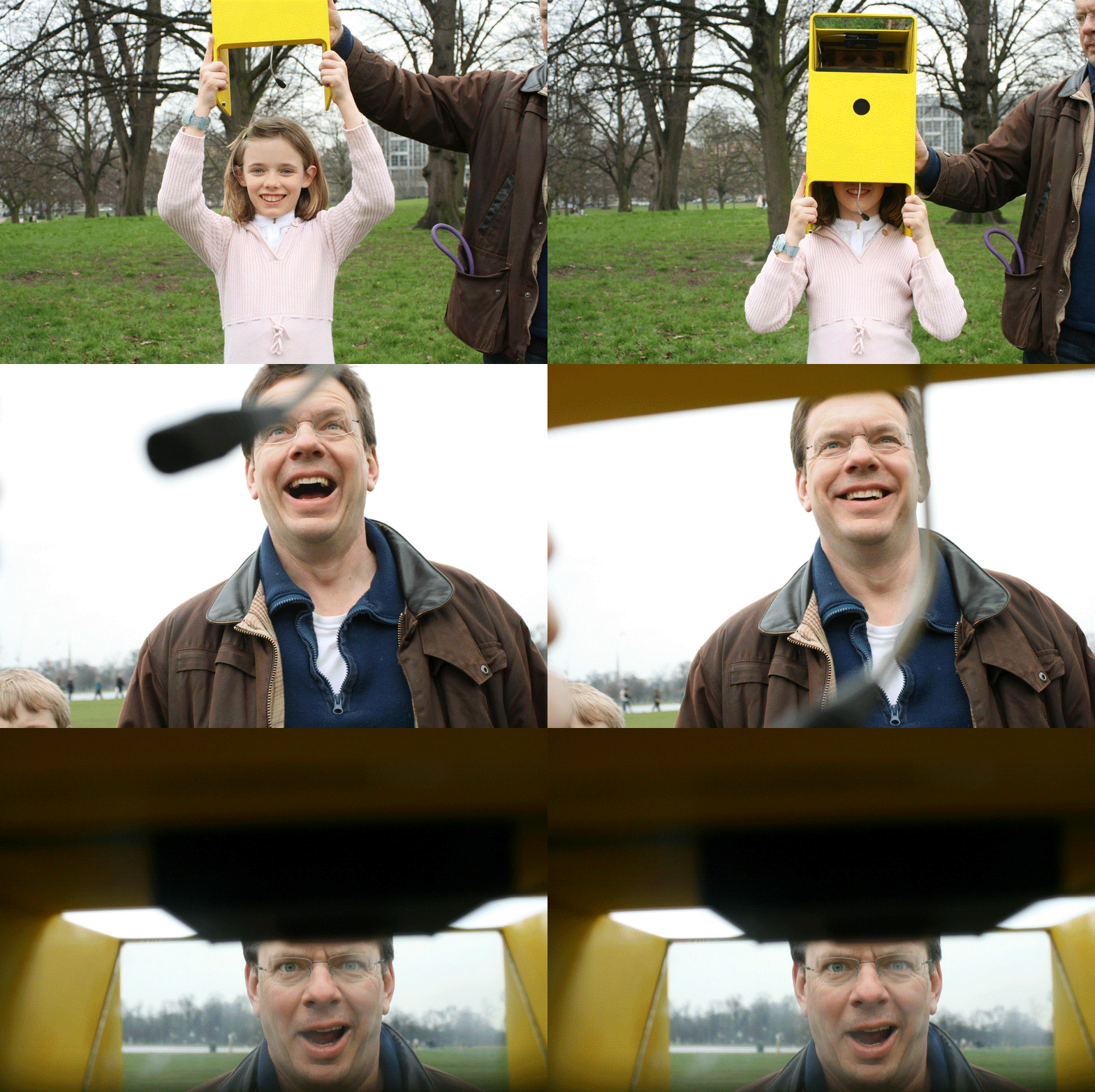
The Giraffe Device raises a child’s viewpoint by 30 cm and shifts their voice to a lower pitch. Changing height and voice offers a playful way to explore how bodily scale shapes encounters with adults.
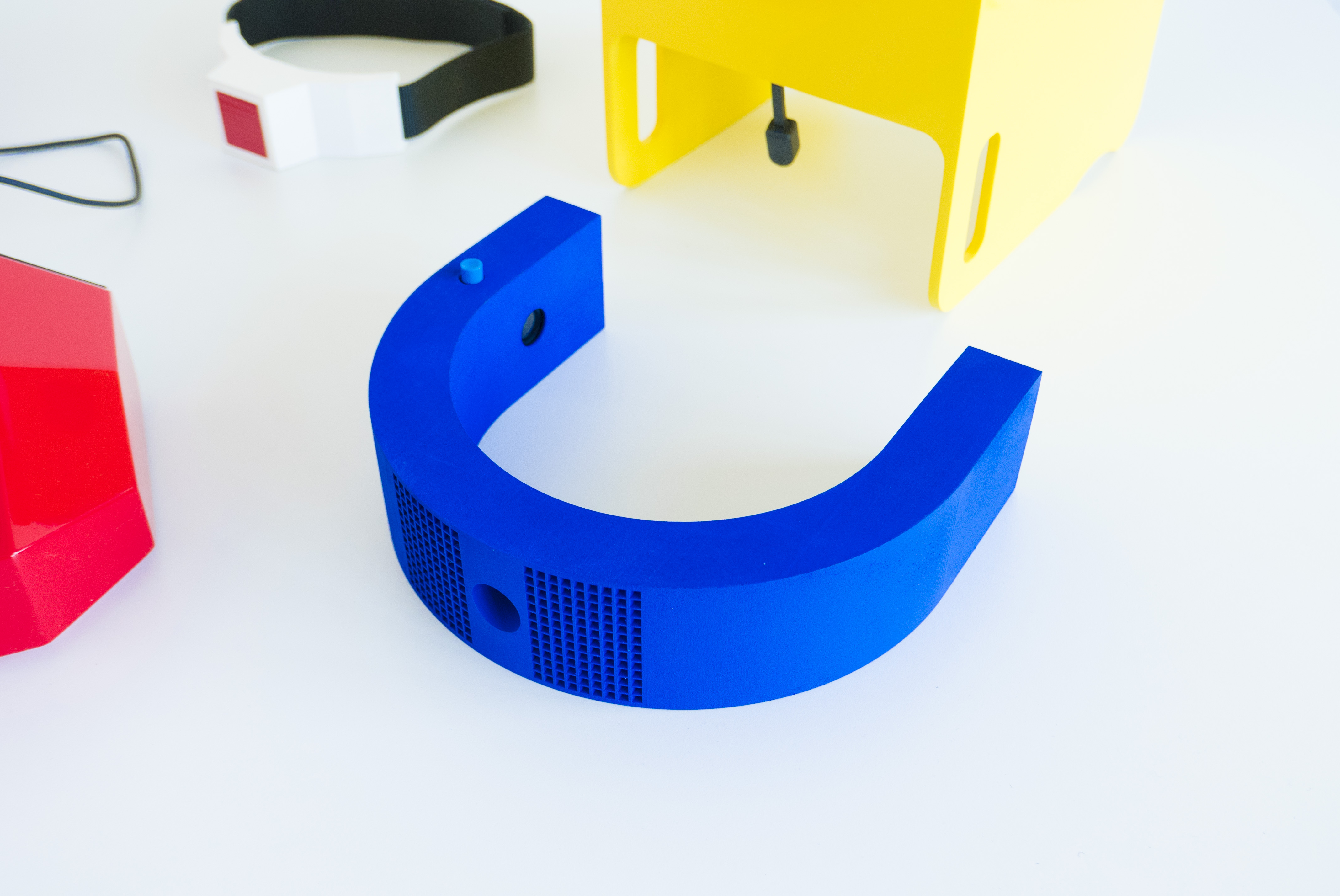
Bat Vision Goggles translate ultrasound into audible sound, allowing wearers to listen for the echolocation calls of nearby bats. The device makes an ordinarily inaudible part of the nighttime environment available to human hearing.
Exhibitions & related material
Exhibitions & public programs
- ANIMALS TURNGroup exhibition curated by Jen Lee. HART HAUS, 12P Smithfield, Kennedy Town, Hong Kong, 15 January to 26 February 2027. With Kenichi Okada.
- In:Bodied — The Augmented SelfArnold and Sheila Aronson Galleries, Parsons School of Design, New York. Ant Apparatus.
- HUMAN+ — The Future of Our SpeciesPalazzo delle Esposizioni, Rome. Curated by Cathrine Kramer.
- HUMAN+ — The Future of Our SpeciesArtScience Museum, Singapore.
- HUMAN+ — The Future of Our SpeciesCCCB, Barcelona. Curated by Cathrine Kramer.
- Landscape Futures: Instruments, Devices and Architectural InventionsNevada Museum of Art, Reno. Curated by Geoff Manaugh.
- Talk to Me: Design and the Communication between People and ObjectsThe Museum of Modern Art, New York. Curated by Paola Antonelli. Ant, Bird and Giraffe devices.
- MODE:DEMO at Lift10HEAD – Genève, Centre International de Conférences, Geneva.
Articles, publications & talks
- From human-centred to interspecies designSara Kaiser on interspecies design, including Animal Superpowers.
- Insect SpectaclesGeoff Manaugh’s interview, originally published in Landscape Futures (2013).
- The future of our species — DomusDomus, 11 November 2015. HUMAN+ exhibition feature including Animal Superpowers.
- Talk to Me: Design and the Communication between People and ObjectsProject record: Animal Superpowers — Ant and Giraffe.
- The Whisper of Things: Talk to Me — ArtNexusLuis Camnitzer, ArtNexus 83, December–February 2012. Review of Talk to Me, including Animal Superpowers.
- RCA Show 2008 — Core77Core77, 9 July 2008. RCA degree-show report including Animal Superpowers.